Why I Almost Wasted $200 on the Wrong Tool
Here's what nobody tells you when you're staring down a weekend project list : half the battle isn't the labor. It's picking up the right tool before you start, not mid-project when the hardware store is closed and Megan is quietly judging the pile of unassembled cabinet hardware on the kitchen counter.
Cordless drill? Great for hanging TV mounts or building shelves in the garage. Terrible for tightening hinge screws on Chloe's bedroom door or reassembling an outlet cover without stripping everything in sight.
Manual screwdrivers? Fine, but my wrists have taken enough abuse at the plant. I wasn't about to spend a Saturday fighting Phillips heads by hand.
What I needed was a middle-ground tool. Something with real motor control, a battery that wouldn't die after 20 minutes, and a form factor I could actually use in tight spaces. I found it — and it cost me less than a dinner out.
→ Grab the HOTO Electric Screwdriver on Amazon
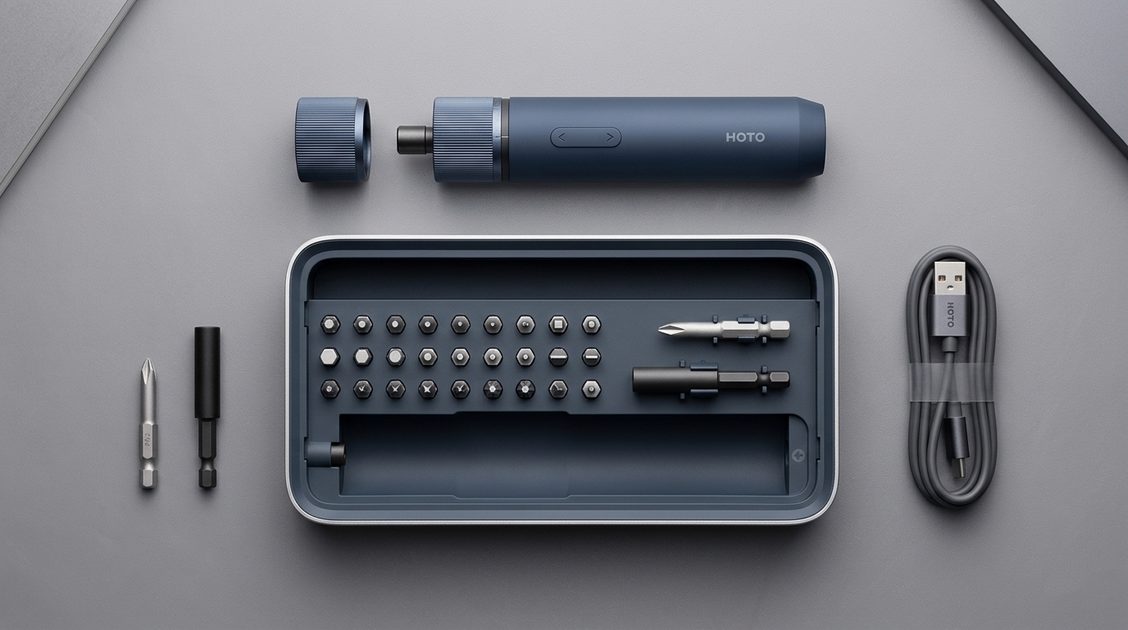
The HOTO Electric Screwdriver Kit: What You're Actually Getting
HOTO isn't a brand most guys in the Midwest have heard of — yet. But they've been winning design awards (including recognition from MoMA) and quietly building one of the best-reviewed electric screwdriver lines on Amazon. The QWLSD011 kit is their flagship mid-range model, and after about four months of regular use across a dozen different projects, I'm ready to call it one of the smartest $40 I've spent on tools in the last five years.
Here's the spec breakdown, because I know that's what you came for:
Spec | Detail |
Motor Voltage | 3.6V |
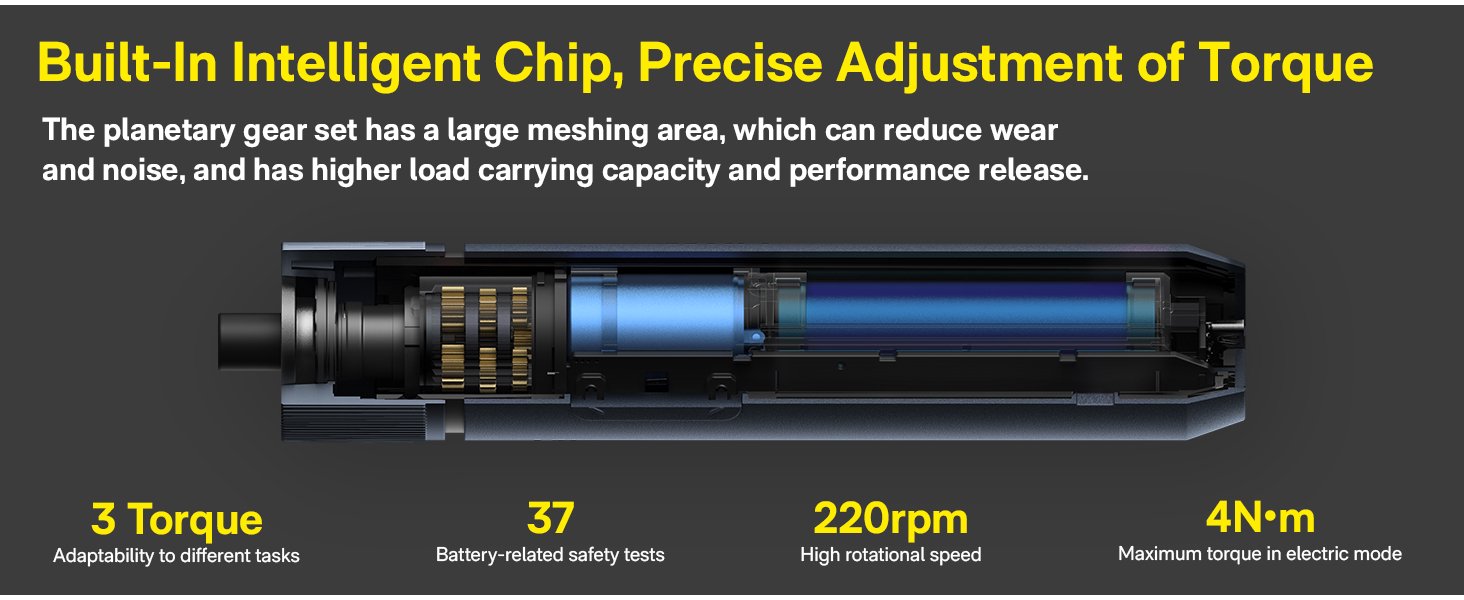
Max Torque (Electric) | 4 N·m |
Max Torque (Manual) | 8 N·m |
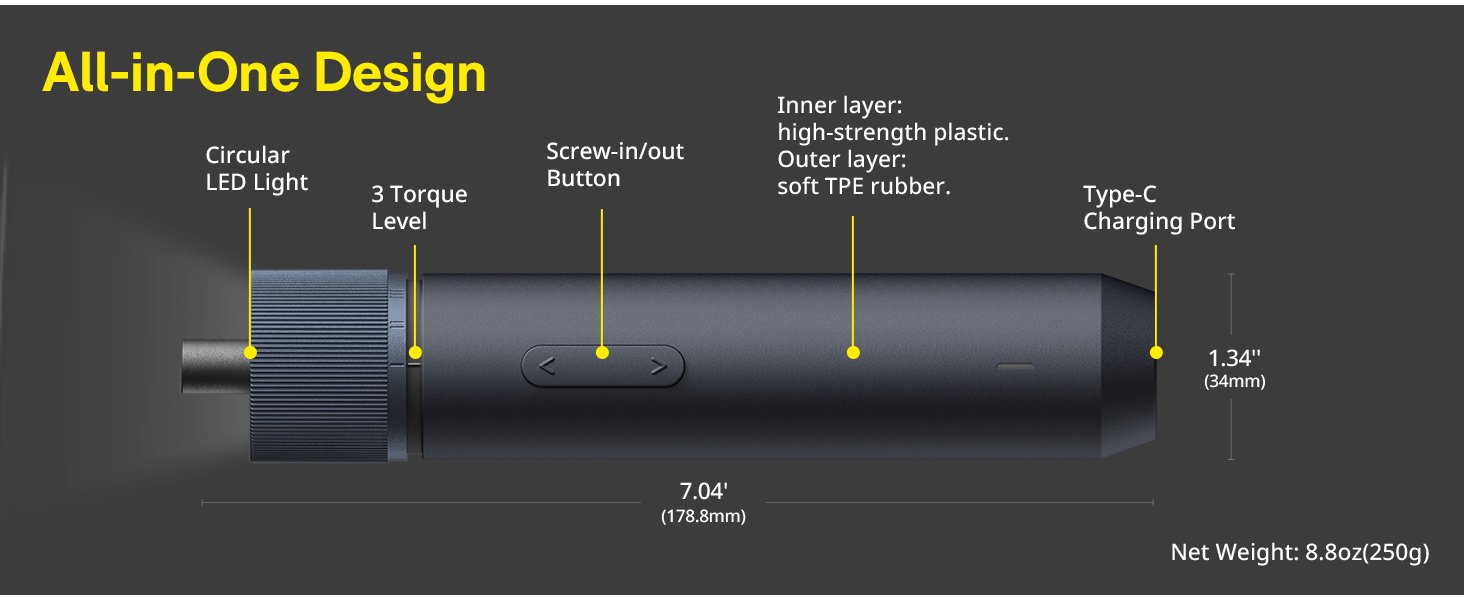
Torque Settings | 3 levels |
Battery | 1,500 mAh Li-Ion |
Screws Per Charge | ~800 |
Charging | USB-C, under 150 min |
Speed (Unloaded) | 220 RPM |
Bit Count | 25 S2-Steel bits |
Bit Hardness | Up to 60HRC |
Modes | Electric + Manual |
Case | Magnetic lid aluminum case |
Dimensions | 7 in long × 1.25 in diameter |
Weight | ~1 lb 7 oz |
The numbers that matter most to me: 4 N·m of electric torque, 800 screws per charge, and USB-C charging. That's a tool that's genuinely useful, genuinely portable, and charges with the same cable as my phone. No more hunting for a proprietary charger at 10 PM.
Four Months, Twelve Projects — Here's What Actually Happened
The Cabinet Hardware Job That Started It All
The first real test was a weekend cabinet refresh in our laundry room. I'm talking 16 new hinges, 8 drawer pulls, and two soft-close mechanisms that needed careful installation without over-torquing. With my drill? I would've stripped at least two hinges before lunch.
I set the HOTO to torque level 1 — the lightest setting — and worked through every single hinge and pull without a single stripped screw. The 3-level torque adjustment isn't a gimmick here. For delicate cabinet hardware, that low setting is genuinely protective. For tougher jobs, bumping to level 2 or 3 gives you what you need without switching tools.
Megan noticed I was done two hours earlier than she expected. That's the real endorsement.
→ Grab the HOTO Electric Screwdriver on Amazon
Replacing the Garage Door Weatherstrip
This one was pure grunt work — about 40 screws into metal track, working in a cold garage in February. I ran the HOTO on level 3 the entire time. By the end of the job (probably 45 minutes of actual runtime), the battery was still showing good charge. At a rated 800 screws per charge, I wasn't going to kill it on weatherstrip installation. The 1,500 mAh battery lives up to the spec sheet here — this isn't one of those tools where the real-world performance is half the advertised number.
The LED ring light around the tip deserves a special mention. Working in the corner of the garage where the track meets the wall, I would've been fumbling with a headlamp. Instead, the built-in light illuminated exactly where I was driving without casting any shadow. That's a thoughtful engineering detail — the kind of thing you only notice when it's absent from cheaper tools.
Chloe's IKEA Bed Assembly
Seven-year-olds are very opinionated about their bedroom furniture. When Chloe decided she wanted a loft bed, I knew I was in for a long Saturday. IKEA assembly is the kind of job that destroys hand screwdrivers and puts too much load on a full-size drill. The HOTO hit the sweet spot.
Over about 3 hours of on-and-off use, I drove somewhere around 120 screws. The HOTO handled every single one cleanly. The slim 1.25-inch diameter body meant I could get into the tight corner joints of the bed frame without awkward angles, and the balanced weight distribution meant my wrist wasn't killing me by the end.
Outlet Cover Replacements and General Electrical Trim
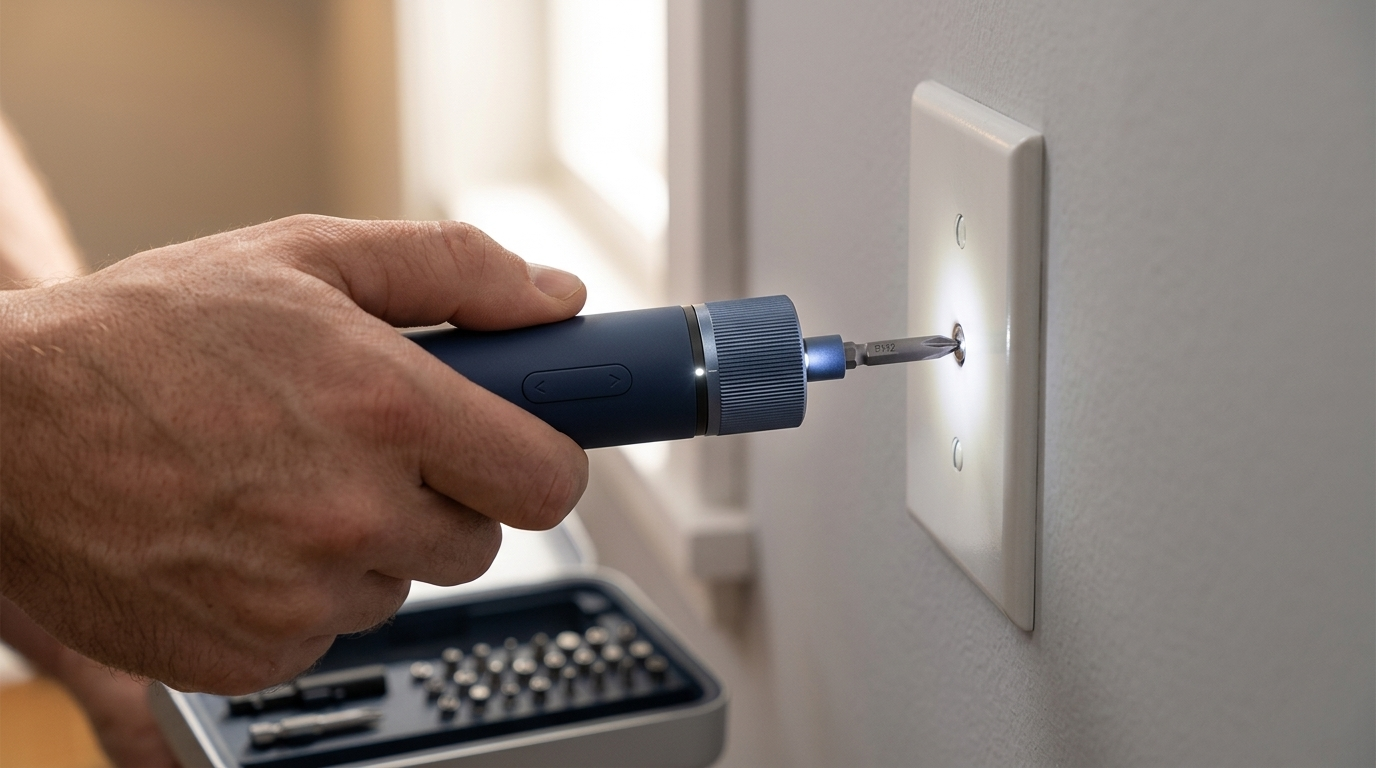
We've been doing a slow upgrade of the original outlet and switch covers throughout the house — the 1989 vintage ones look tired. This is a classic "takes 5 minutes but you never do it" job that I finally knocked out in a single afternoon. About 30 covers, two screws each: 60 screws total.
This is exactly the job that exposes cheap cordless screwdrivers. Low-end models strip the #2 Phillips at the first sign of resistance, and their batteries die before you're halfway through. The HOTO's S2-steel bits (rated to 60HRC hardness) held an edge through all 60 screws without any tip wear I could detect. The magnetic bit holder kept each bit seated without wobbling.
The Design Decision That Separates This from Cheap Tools
I want to spend a minute on something that sounds superficial but isn't: the case.
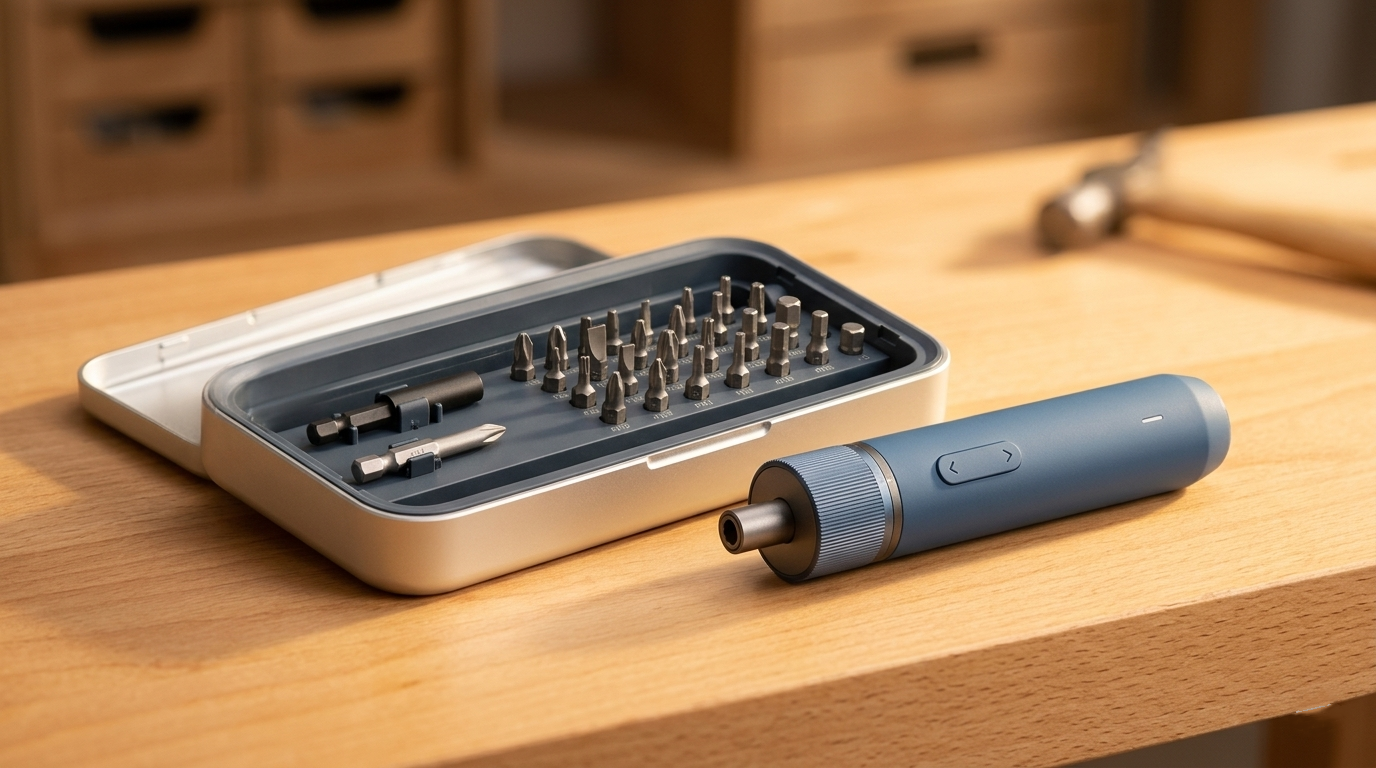
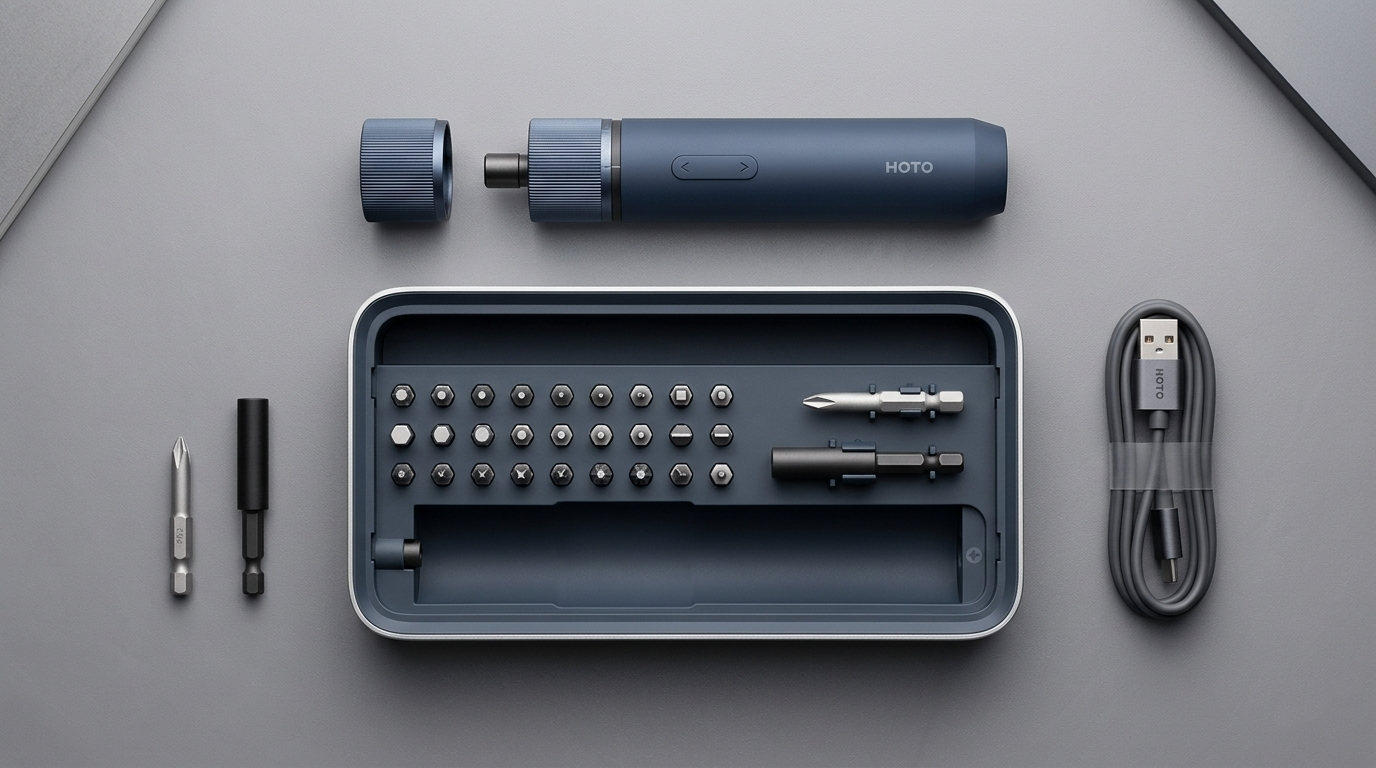
The QWLSD011 ships in a compact aluminum storage case with a magnetic lid that snaps open smoothly with one hand. The 25 bits are organized along the edges in labeled slots, and the screwdriver sits in a molded center channel. It closes flush, it's compact enough to toss in a bag, and it has a carry loop at the top.
Why does this matter? Because tool organization is actually a time cost. Every time I need a Torx bit and I'm digging through a zippered pouch trying to remember which unlabeled tip is the T20, I'm wasting time and getting frustrated. With the HOTO case, I can ID and grab the right bit in about 10 seconds. For a guy running projects at work where time efficiency is a literal KPI, that stuff adds up.
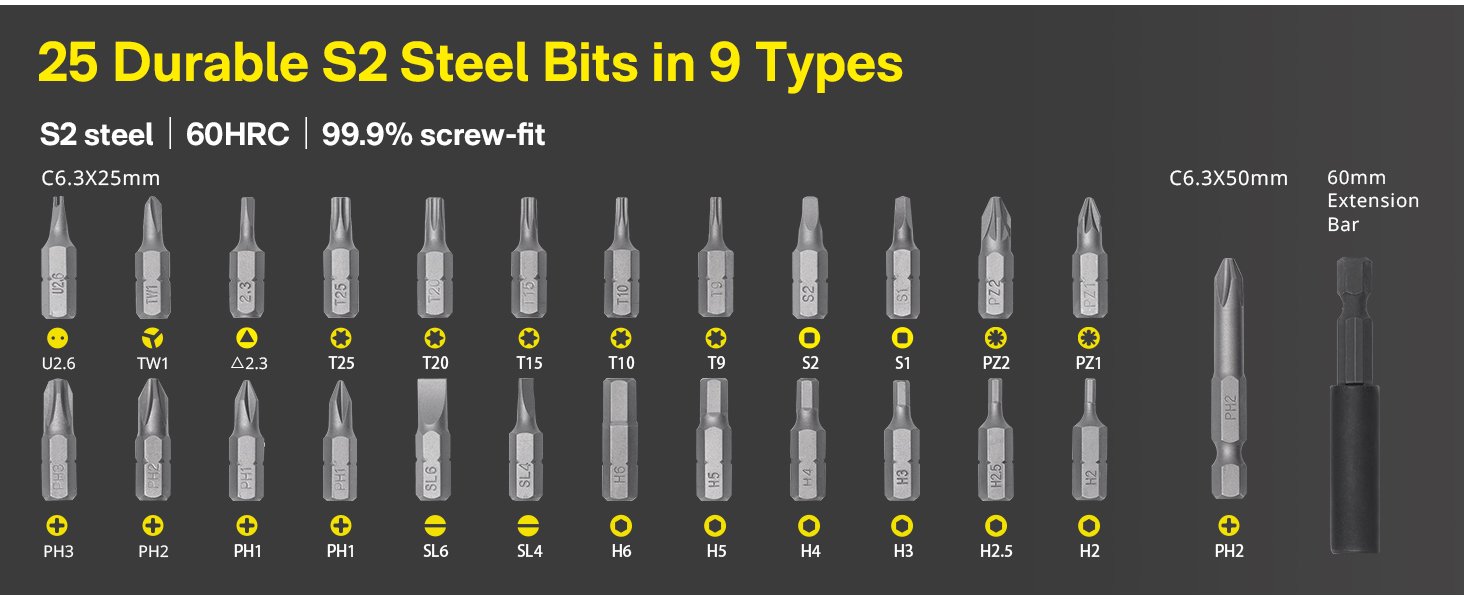
The 25-bit selection covers the full range of everyday jobs: Phillips (PH1/PH2/PH3), flat head (SL4/SL6), hex (H2 through H6), Torx (T9 through T25), Pozidriv (PZ1/PZ2), and some specialty bits for tri-wing and security fasteners. In four months of home use, I have yet to encounter a screw the kit couldn't handle.
Dual-Mode Operation: The Feature I Use More Than Expected
One thing I didn't fully appreciate until I'd been using the HOTO for a few weeks is the manual mode. The mechanical knob on the body lets you switch from electric to manual screwdriver mode. This matters for two scenarios:
Final tightening on sensitive materials. For wood screws where I want precise feel at the end of the drive, switching to manual gives me total control.
Silent operation. When I'm working on something in Chloe's room after she's asleep, running a quiet manual drive is less disruptive than spinning up the motor.
It sounds like a minor feature, but it's one I reach for regularly. A true dual-mode tool is genuinely more versatile than a pure electric driver — especially for a house that mixes delicate interior work with tougher garage jobs.
What I'd Tell You to Watch Out For
I'm not going to pretend this tool is perfect, because nothing at $40 is.
Torque ceiling
The 4 N·m electric torque is excellent for household and light workshop tasks. It is not a substitute for a full-size driver on heavy construction work, lag screws, or anything structural. Know what you're buying: this is a precision screwdriver, not a power driver.
Grip preference
The cylindrical form factor is different from a pistol-grip driver. Some people prefer the feel of a gun-style handle; others (like me) find the inline style more natural for fine work. If you've never used an inline electric driver, it's worth knowing going in that it takes a few minutes to feel natural.
Single charge indicator
The HOTO has a basic battery LED rather than a detailed percentage indicator. For most jobs, this is fine — you're not going to run it dead mid-task. But if you want real-time battery tracking, the upgraded HOTO PixelDrive (around $60) has a display screen. For most homeowners, the base model's battery life is more than adequate.
These aren't deal-breakers. They're honest context for what this tool is and isn't.
How It Compares: Quick Positioning
If you're trying to figure out where the HOTO fits against what you might already own:
vs. manual screwdrivers: Faster, easier on wrists, same precision with 3 torque levels. No brainer replacement for anything beyond quick single-screw jobs.
vs. your cordless drill with a bit: The drill wins on torque for heavy work. The HOTO wins on control, form factor, and not stripping delicate screws.
vs. cheaper electric screwdrivers ($15–$25): This isn't a fair comparison. The bit quality, battery capacity, case, and torque adjustment on the HOTO put it in a different class entirely.
This is the electric screwdriver I recommend to anyone who owns a house. At this price, the question isn't whether you can afford it — it's why you've been putting it off.
→ Grab the HOTO Electric Screwdriver on Amazon
I've been a project manager long enough to know that the right tool scoped to the right job is always more efficient than brute-forcing with the wrong one. The HOTO Electric Screwdriver Kit is the right tool for a wide range of everyday home jobs — and at under $40, it's one of the most cost-efficient upgrades you can make to your tool kit without overthinking it.
For a 1989 house that always has a list of small fixes waiting, this thing has genuinely changed how I approach weekends. I don't dread the "quick" jobs anymore because I have a quick tool for them.
Especially if you're in the same boat I was: over-drilled for small work and under-equipped for precision.



No signals yet — transmit the first.