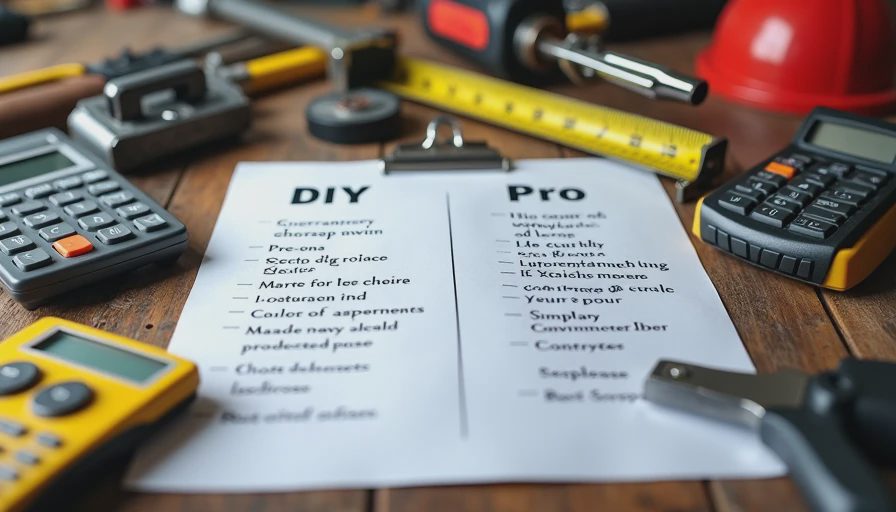
I know, you’ve got the scoping tools, budget process, and quote review checklist. But before you commit time, money, or cut into a wall, you need one more filter: Is this project actually worth doing yourself?
I’ve started projects I had no business doing and hired out work I could have handled. Both cost me. Over time I developed a clear set of rules that help me decide quickly and honestly. This isn’t about fear or laziness. It’s about using your time and money where they deliver the best return.
My Core Decision Framework
I evaluate every potential project on five factors. I score them mentally or on paper and the pattern usually becomes obvious.
1. Safety and Code Risk
If it involves gas lines, main electrical panels, structural modifications, or waterproofing in wet zones — I stop. Call a licensed pro. No exceptions. The potential cost of a mistake is too high.
2. Skill and Tool Gap
Do I currently own the tools and have recent experience with this exact type of work? If the learning curve is steep and the project is large, the risk of doing it wrong increases fast.
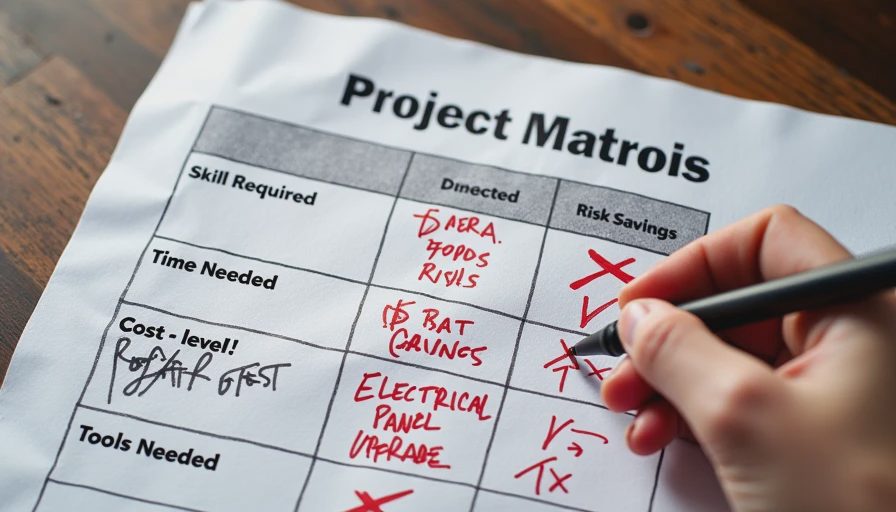
3. Time vs Family Impact
How many weekends or evenings will this actually take? Will it disrupt Chloe’s routine or Megan’s work-from-home days? A project that drags on for weeks usually isn’t worth it.
4. True Cost Savings
I calculate my effective hourly rate. If I value my time at $60–$80 per hour (based on what I earn at the plant), does the savings justify the effort? Add in the cost of mistakes and rework.
5. Long-term Durability and Warranty
Will a pro installation come with a meaningful warranty? Sometimes paying more upfront prevents callbacks that destroy your weekends later.
Rule of thumb: For jobs under $400 with low risk and good tools already in the garage, I lean DIY. Above $1,200 or high complexity, I strongly consider hiring unless I have specific experience.
Follow the procedure and everything will be fine.
Real Projects and How I Decided
DIY Win — Bathroom Faucet Replacement
Scope: straightforward, tools on hand, low risk, $180 total. Took one afternoon. Saved roughly $350–$450 compared to a plumber. Clear yes.
Hire Decision — Main Bathroom Renovation
Involved moving plumbing lines, new tile waterproofing, and electrical. My calculated risk and time commitment were high. Hired a recommended crew for $6,800. The job finished clean with warranty. Doing it myself would have taken three times longer and likely needed fixes later.
Expensive Lesson — Attempted Electrical Outlet Rewiring
Early in the house I thought “how hard can it be?” I started and quickly realized the wiring was older than expected. Ended up calling an electrician mid-project and paid a premium because the wall was already open. Cost me extra $280 and two days of mess. Now I stop at the first sign of old wiring.
Garage Organization Shelving
Perfect DIY. I had the tools, the scope was clear, risk was low. Total cost $320 instead of $850 quoted. Still holding strong years later.
Megan has seen me walk away from projects that looked fun but failed the framework. She used to push for more DIY until she lived through the half-finished electrical incident. Now she trusts the process.

When I Almost Always Hire a Pro
Anything behind the walls in wet areas (showers, tubs)
Main electrical panel or heavy circuit work
Gas line modifications
Structural changes or load-bearing walls
Roof work or exterior siding
Anything requiring permits that I’m not confident handling
For borderline jobs I use this go/no-go test:
Can I complete it in one or two weekends max?
Do I have all tools or can I rent them cheaply?
Is the worst-case failure something I can fix or afford to fix?
Will the result look professional enough that I won’t regret it later?
If I answer no to two or more, I get quotes.
If you ignore this evaluation, three to six months from now you may be living with a half-done project or an expensive repair.
Building Your Own Decision Rules
Start by being brutally honest about your current skills. Keep a simple log of past projects with actual time spent and final cost. After five or six jobs you’ll have real data for your house and abilities.
My personal thresholds for our 1989 house:
Plumbing visible under sinks or in garage: usually DIY
Plumbing inside walls: usually pro
Drywall patching and painting: DIY
Full room flooring with subfloor issues: often pro for speed and quality
Garage and backyard practical upgrades: almost always DIY
Tools and experience change the equation over time. Two years ago I wouldn’t touch certain electrical work. Now with better tools and practice I handle simple circuits safely.
The Bigger Picture
Deciding not to DIY isn’t failure. It’s good project management. The goal is a better house with controlled risk and preserved family time. Sometimes the smartest move is writing the check and using your weekends for the projects you actually enjoy and excel at.
Measure first (run the full decision framework), then cut (commit to DIY or hire). This single habit has saved me more money and aggravation than any tool in the garage.
Next time you see an exciting project online, force yourself through this evaluation before buying materials. You’ll make clearer decisions and finish more projects successfully — whether by your own hands or with the right help.




No signals yet — transmit the first.